

Water and services,
under the line above.
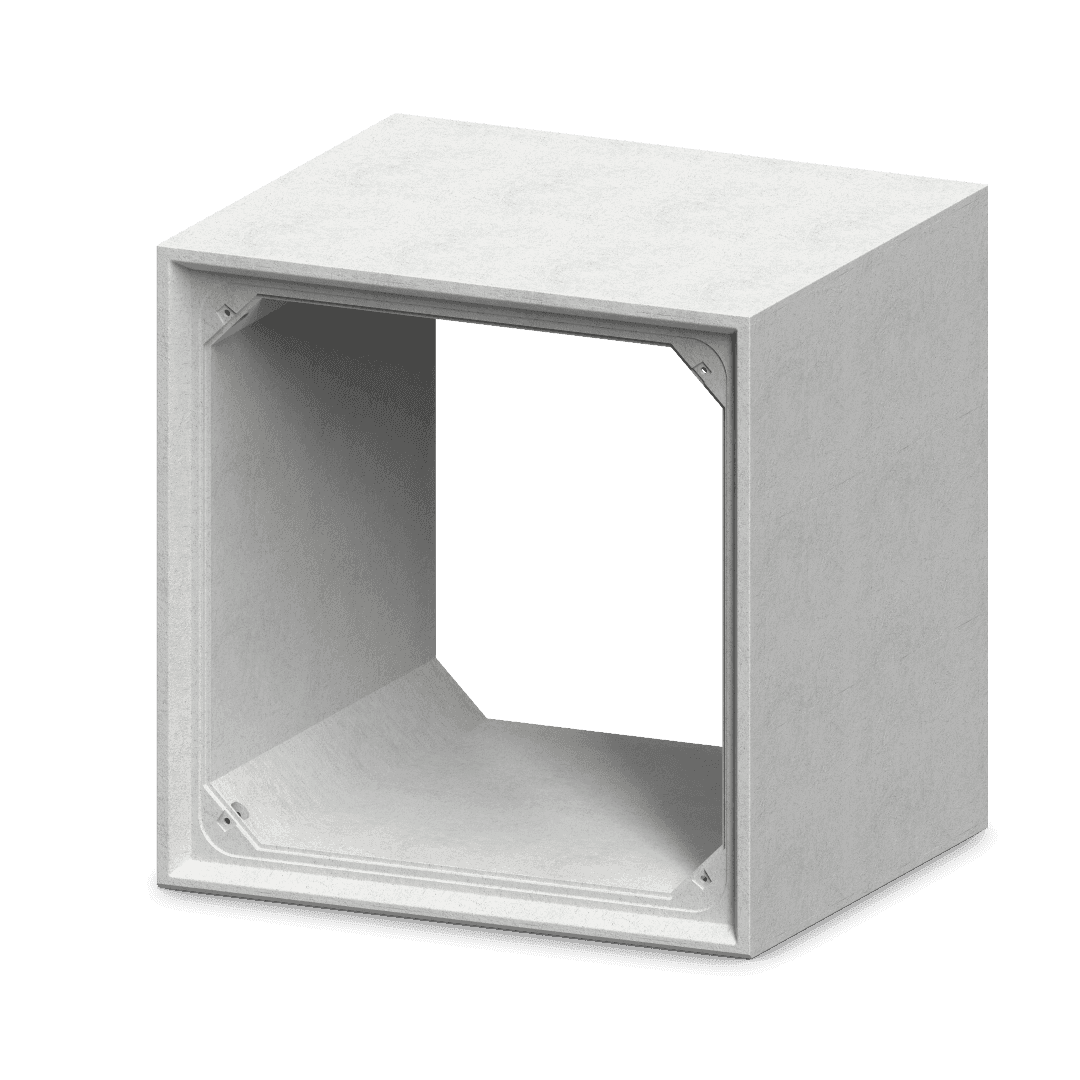
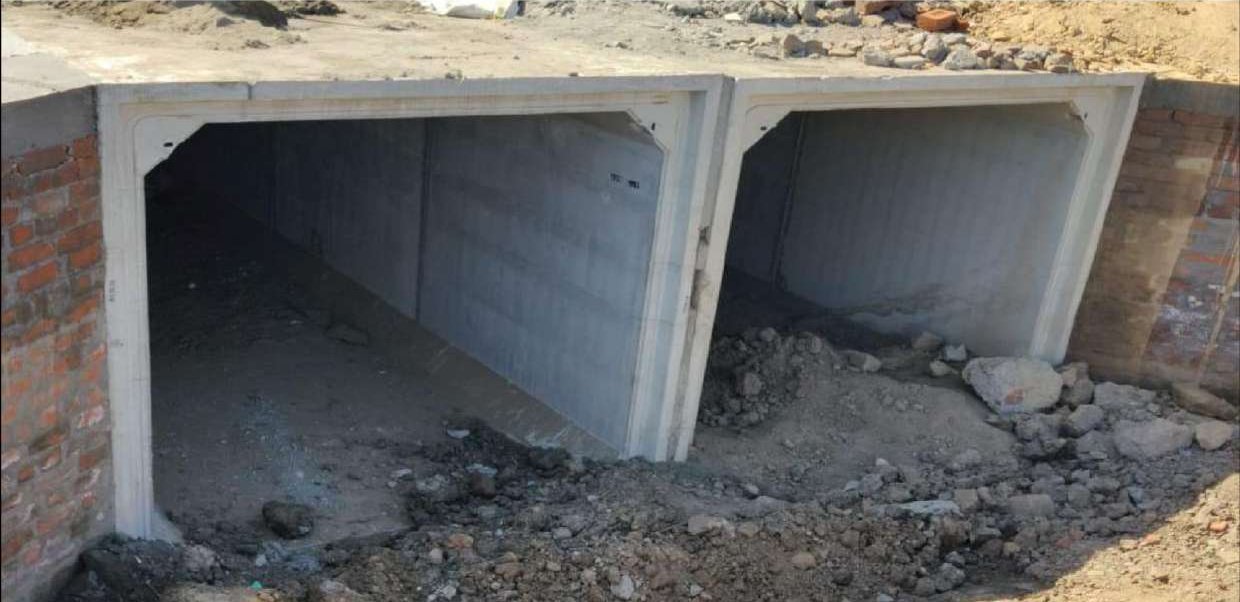
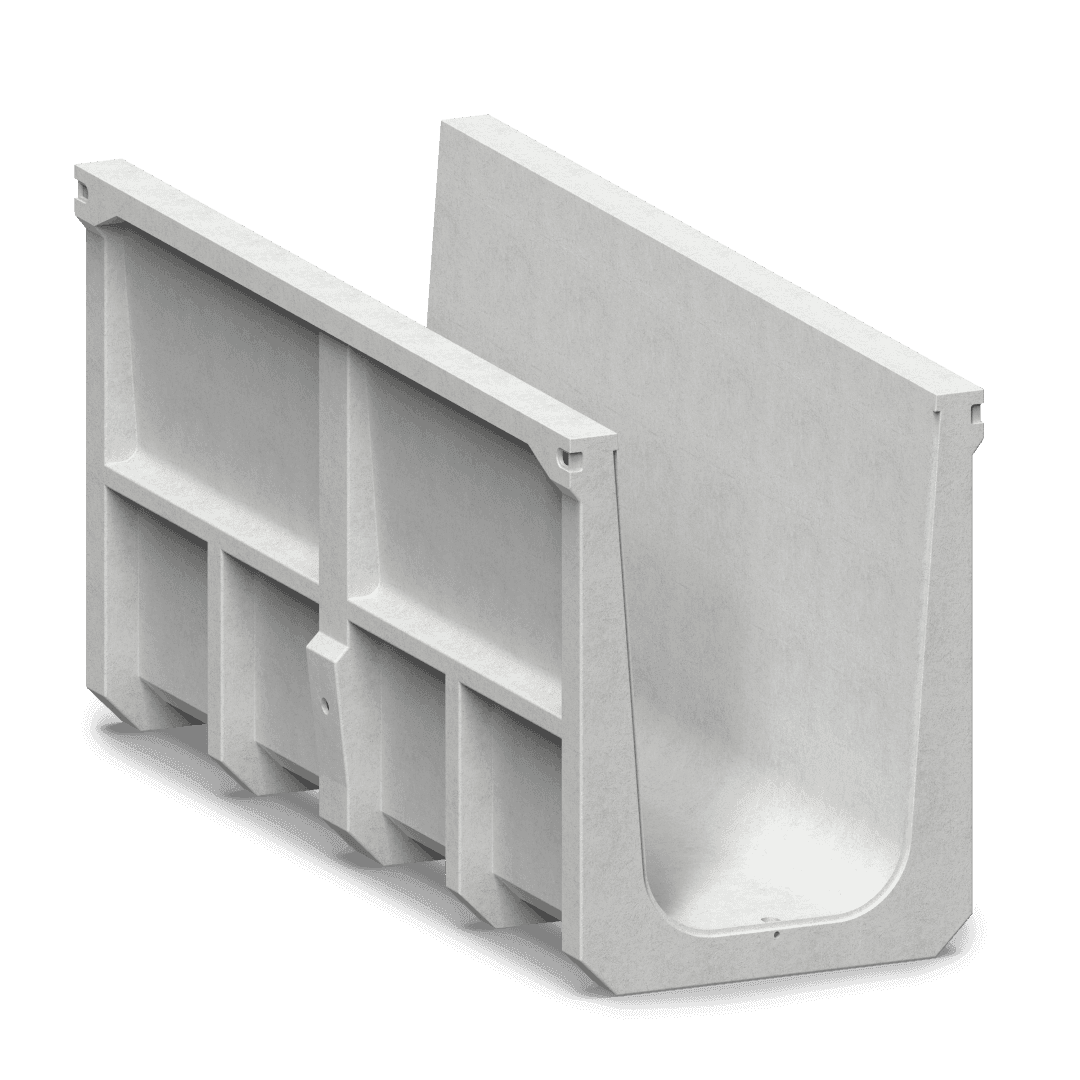
A box culvert carries water and services across the line of a road or railway without breaking the surface above. Cast complete in RCC, each box is set into the trench, jointed and backfilled — the route over the top carries on as if it were never opened.
Single cell or twin, the box is sized to the hydraulic load it has to pass and the traffic load it has to carry. It is the crossing we put under highways, embankments and rail lines where the structure has to take everything overhead.
Building a culvert in place means a long open cut across a live route and weeks of formwork and curing. A precast box arrives finished — it sets in a day, takes load immediately, and the route reopens far sooner.
Cast complete, set in a day. The road over the top barely knows the crossing went in.
— Trilok Infratech
It runs under road and rail crossings, cross-drainage channels and utility corridors — anywhere a span has to pass water or services beneath a load-bearing surface.
A crossing that takes the load above it.
Sized to the water below and the traffic above — cast complete so the route over the top reopens fast.
Carries road & rail
Sized and reinforced to take highway and railway loads passing overhead.
Single or twin cell
One box or two, matched to the hydraulic load the crossing has to pass.
Straight into the trench
Cast complete, set in sequence and backfilled the same day.
Engineering specifications.
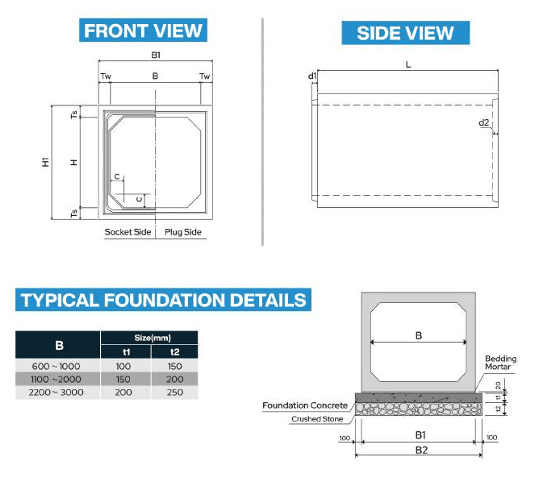
Standard precast RCC box sections — for storm water drains, power ducts and road crossings, as a replacement of pipe culverts. Customized sizes available for mass quantity.
Standard box sections.
Swipe to see all columns
| Size B × H (mm) | B | B1 | H | H1 | L | Ts | Tw | C | d1 | d2 |
|---|---|---|---|---|---|---|---|---|---|---|
| 300 × 300 | 300 | 416 | 300 | 475 | 2000 | 95/80 | 55 | C30/R50 | — | — |
| 500 × 500 | 500 | 680 | 500 | 740 | 2000 | 120 | 90 | C50 | — | — |
| 600 × 600 | 600 | 775 | 600 | 860 | 2000 | 130 | 80 | C50/R80 | — | — |
| 800 × 800 | 800 | 1060 | 800 | 1060 | 2000 | 130 | 130 | 100 | 60 | 60 |
| 600 × 1000 | 600 | 860 | 1000 | 1260 | 2000 | 130 | 130 | 150 | 60 | 60 |
| 900 × 1000 | 900 | 1160 | 1000 | 1260 | 2000 | 130 | 130 | 150 | 60 | 60 |
| 1000 × 1000 | 1000 | 1260 | 1000 | 1260 | 2000 | 130 | 130 | 150 | 60 | 60 |
| 1200 × 1000 | 1200 | 1460 | 1000 | 1260 | 2000 | 130 | 130 | 150 | 60 | 60 |
| 1000 × 600 | 1000 | 1260 | 600 | 860 | 2000 | 130 | 130 | 150 | 60 | 60 |
| 800 × 1400 | 800 | 1060 | 1400 | 1660 | 2000 | 130 | 130 | 150 | 60 | 60 |
| 900 × 1400 | 900 | 1160 | 1400 | 1660 | 2000 | 130 | 130 | 150 | 60 | 60 |
| 1000 × 1400 | 1000 | 1260 | 1400 | 1660 | 2000 | 130 | 130 | 150 | 60 | 60 |
| 1200 × 1400 | 1200 | 1460 | 1400 | 1660 | 2000 | 130 | 130 | 150 | 60 | 60 |
| 1300 × 1400 | 1300 | 1560 | 1400 | 1700 | 2000 | 150 | 130 | 150 | 60 | 60 |
| 1500 × 1400 | 1500 | 1760 | 1400 | 1700 | 2000 | 150 | 130 | 150 | 60 | 60 |
| 1400 × 1000 | 1400 | 1660 | 1000 | 1260 | 2000 | 130 | 130 | 150 | 60 | 60 |
| 1400 × 1200 | 1400 | 1660 | 1200 | 1460 | 2000 | 130 | 130 | 150 | 60 | 60 |
| 2000 × 1200 | 2000 | 2320 | 1200 | 1560 | 2000 | 180 | 160 | 200 | 80 | 80 |
| 2000 × 1500 | 2000 | 2320 | 1500 | 1860 | 2000 | 180 | 160 | 200 | 80 | 80 |
| 2000 × 1800 | 2000 | 2320 | 1800 | 2160 | 2000 | 180 | 160 | 200 | 80 | 80 |
| 2000 × 2000 | 2000 | 2320 | 2000 | 2360 | 2000 | 180 | 160 | 200 | 80 | 80 |
| 2500 × 1500 | 2500 | 2900 | 1500 | 1940 | 1500 | 220 | 200 | 200 | 80 | 80 |
| 2500 × 1800 | 2500 | 2900 | 1800 | 2240 | 1500 | 220 | 200 | 200 | 80 | 80 |
| 2500 × 2000 | 2500 | 2900 | 2000 | 2440 | 1500 | 220 | 200 | 200 | 80 | 80 |
| 2500 × 2500 | 2500 | 2900 | 2500 | 2940 | 1500 | 220 | 200 | 200 | 80 | 80 |
Customized sizes available for mass quantity.
Typical foundation details.
Bedding mortar, foundation concrete and crushed stone, thickening with the span.
| Span B (mm) | t1 | t2 |
|---|---|---|
| 600 – 1000 | 100 | 150 |
| 1100 – 2000 | 150 | 200 |
| 2200 – 3000 | 200 | 250 |
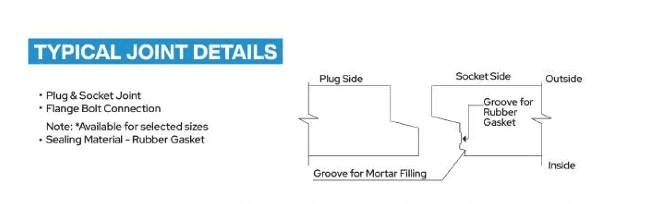
Typical joint details.
Plug and socket — grooves for a rubber gasket and for mortar filling.
Send us a drawing and we'll cast to your exact span, cell count, loading and length.
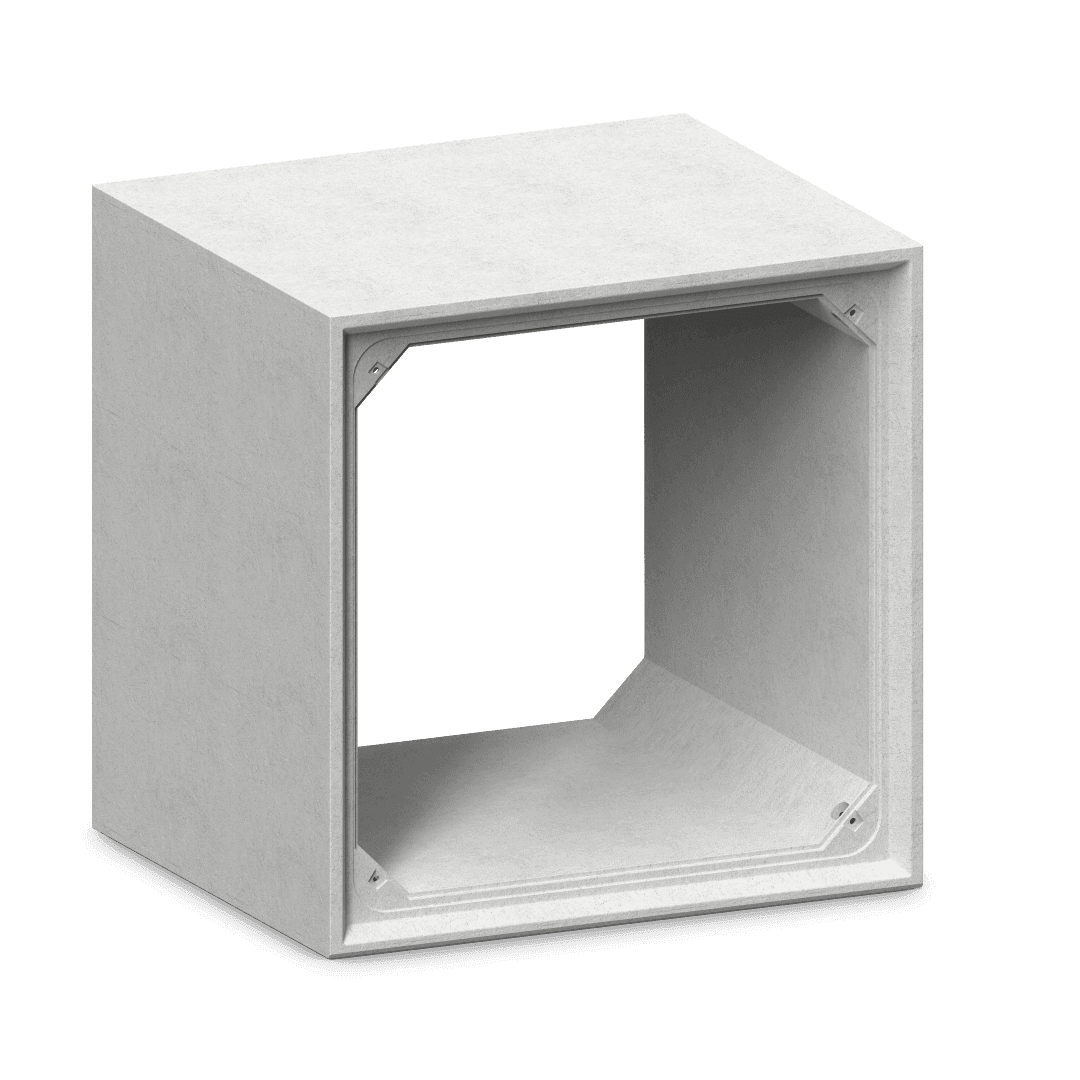
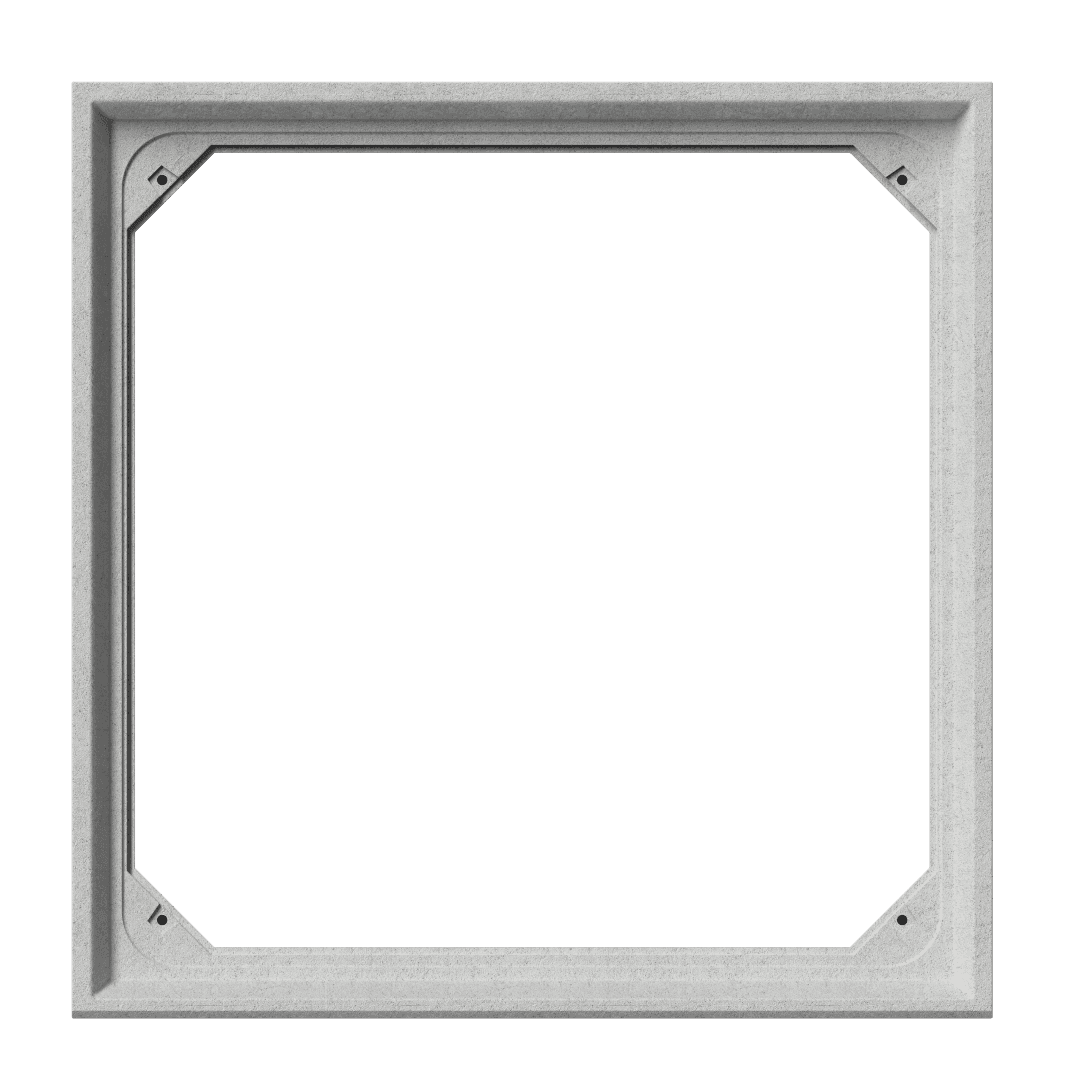
From every angle.
About the box culvert.
Common questions on loading, configuration and jointing. For anything project-specific, send us your drawing.
Each box is reinforced to the load it carries — IRC class highway loading or railway loading — so it takes traffic passing overhead. We design the reinforcement to your specific cover depth and load case.
It comes down to the hydraulic load the crossing has to pass and the headroom available. A twin cell carries more flow within a shallower depth. Send us the flow and cover and we'll size it.
Standard spans run from 300 × 300 mm up to 2500 × 2500 mm. Larger spans are cast in 1500 mm lengths, smaller ones in 2000 mm. Customized sections are available for mass quantity.
A spigot-and-socket joint with a grooved seat for a rubber gasket and mortar filling. Selected sizes are also available with a flange bolt connection for a tighter, drawn-up joint.
A levelled granular bed with bedding mortar and a foundation concrete layer sized to the span — 100–250 mm thick as the span grows. Cast complete, the box sets in a day and is backfilled the same day.
RCC in M40 and above, designed and cast to IS 14930 and IRC loading. Every batch is strength-tested with test certificates and traceability. Send us your span and load for an exact spec.
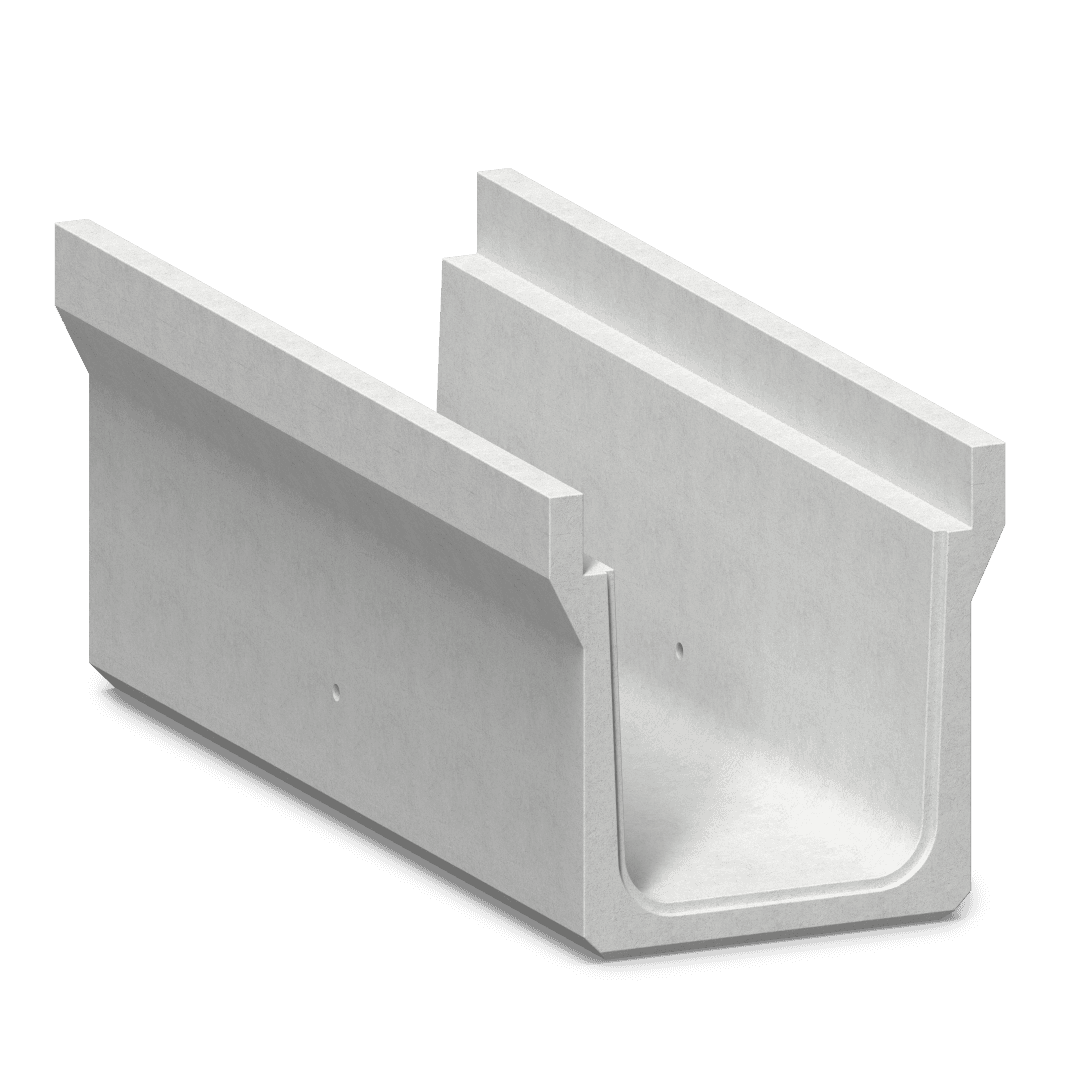
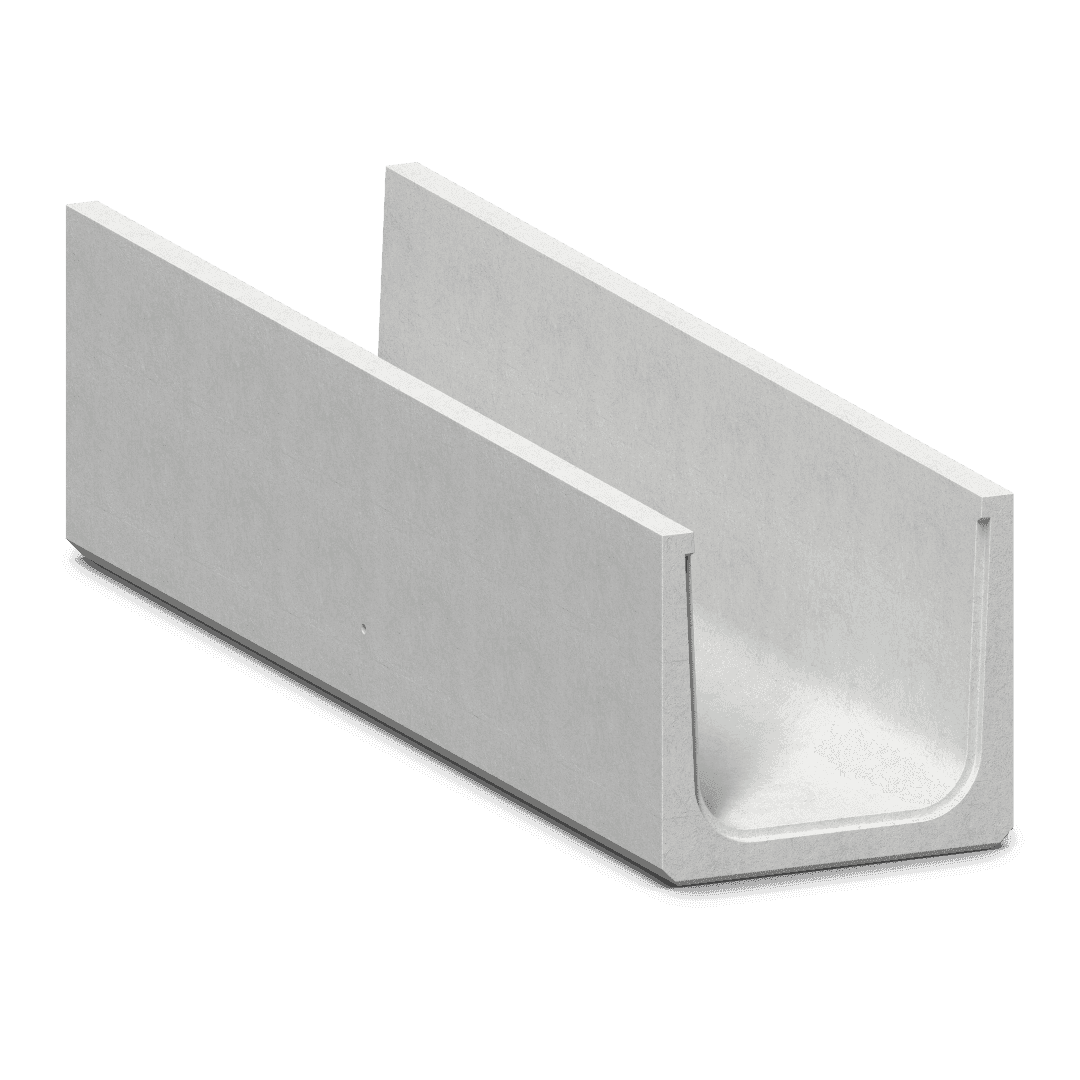
Other precast lines.
Every line is cast to the same factory standard.
Need box culverts?
Send us your specifications and quantities. We'll come back with grades, lead times and a quote — usually within two working days.